

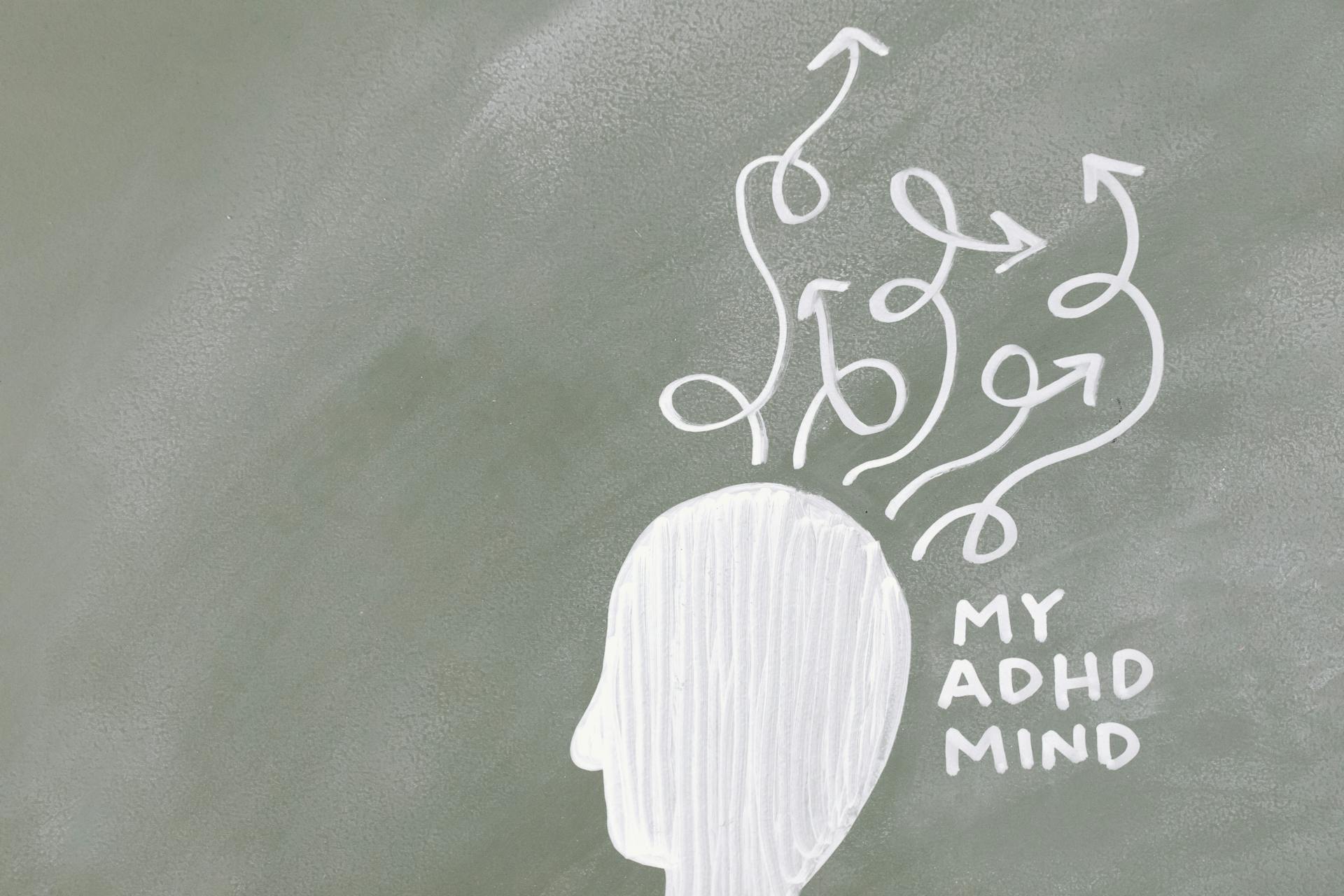

Before I ever received a formal ADHD diagnosis, I lived in this strange in-between space. I knew something about my brain was different. I recognised so many ADHD patterns in myself, but without a diagnosis, I felt like I was constantly trying to prove something invisible. And doing that while juggling full-time work and full-time study was, honestly, overwhelming in ways I didn’t fully understand until much later.
When I think back on that period, it feels like I was living with one foot on the gas pedal and the other on the brake, always pushing forward yet always feeling stuck. Knowing you likely have ADHD but having no diagnosis, no medical support, no accommodations, and no real sense of certainty creates a very specific kind of pressure. It’s like walking around with the answer to your own struggles written in your pocket, but nobody will read it, not even you.
Living through the daily chaos of symptoms you can’t explain
Every day felt like a marathon. I’d wake up already behind, even if I hadn’t technically done anything yet. My mornings were a blur of rushing, forgetting things, doubling back because I left my keys, skipping breakfast because I ran out of time – normal for someone with ADHD, but at the time, I just thought I was “bad at mornings”.
Work demanded structure, focus, consistency, and time management. Meanwhile, my brain was doing its own thing: wandering, racing, latching onto thoughts I didn’t need, or shutting down when the pressure got too high. After 14 hours of masking my struggles at work, switching to study mode felt like trying to start a laptop with 2% battery left.
Assignments that should’ve taken an evening ended up dragging across days because I kept getting mentally stuck or distracted by literally anything: emails, noises, random thoughts, worries, memories, hunger, boredom, you name it.
And the worst part? I knew these things lined up with ADHD. I just couldn’t prove it.
The emotional weight of knowing “something’s off” but having no diagnosis
There’s a very specific kind of frustration that comes from recognising ADHD traits in yourself without the ability to call it what it is. It felt like constantly whispering the truth to myself, while shouting doubts on top of it.
One part of me kept saying:
“This is ADHD. This is why you struggle.”
But a louder voice, fuelled by years of not understanding myself, said:
“You’re just lazy.”
“Everyone else manages life, why can’t you?”
“Maybe you’re making excuses for being overwhelmed.”
Without a diagnosis, every struggle felt like something I had to explain, justify, or defend. I’d look at other people who were balancing work and study, and wonder why their lives seemed less chaotic. Even when I told people, “I think I might have ADHD,” it often got dismissed with comments like:
- “Everyone has trouble focusing sometimes.”
- “You seem fine to me.”
- “Maybe you’re just stressed.”
- “You’re functioning, so it can’t be ADHD.”
So instead of help, I got self-doubt.
The burnout cycle that never ended
Because I had no diagnosis, I didn’t feel entitled to accommodations or support at work or university. I pushed myself harder and harder because I thought sheer willpower would eventually make me function “normally”.
This meant:
- late nights finishing assignments I couldn’t start earlier because my brain froze
- waking up early to redo work I rushed the night before
- skipping breaks because I was “already behind”
- forgetting to take care of myself because everything else felt more urgent
I spent months in a loop of hyperfocus followed by paralysis, followed by guilt, followed by more hyperfocus. I kept telling myself things would get easier once I “got my act together”. But ADHD isn’t something you outwork or out-discipline. Without understanding my brain, I was constantly burning out and calling it “being tired”.
I didn’t realise that I was basically running a marathon every day with no proper shoes.
The hidden impact on my social life and identity
What people don’t always talk about is how undiagnosed ADHD affects how you see yourself. I spent years calling myself messy, disorganised, forgetful, scatterbrained, unreliable, even though I was doing everything I could to keep up. I over-apologised for things that were symptoms. I blamed myself for things that were neurological.
My social life shrank because I was either too drained to socialise, or too ashamed to admit that I didn’t have the mental space for plans. I cancelled things last-minute out of overwhelm and then felt horrible about it. I missed messages, forgot birthdays, lost track of details people told me, and every time, I convinced myself I was a bad friend.
Internally, I felt like I was pretending to be a functioning adult.
Externally, nobody could see the effort it took.
Masking: the invisible work I didn’t know I was doing
Because I didn’t have a diagnosis, I masked constantly. I forced myself to appear organised, calm, and focused, even when my mind was spinning in circles. I wrote endless to-do lists, set countless reminders, overprepared for everything, and pretended that I wasn’t struggling.
Masking is exhausting. It’s like acting all day long and then going home to study another script for the next day’s performance. But without a diagnosis, masking felt necessary, because without one, I had to convince everyone (including myself) that I was fine.
The turning point: finally getting diagnosed
When I finally got my ADHD diagnosis, it felt like someone handed me the missing manual to my own brain. It wasn’t just validation; it was relief. It was proof that I hadn’t been imagining my struggles or exaggerating them. It meant I could finally stop arguing with myself about whether I “deserved” support.
The diagnosis didn’t fix everything overnight, but it reshaped my understanding of my entire life. Suddenly:
- my procrastination had a reason
- my overwhelm had a name
- my burnout made sense
- my struggles were symptoms, not failures
And most importantly, I realised I wasn’t broken, I had been unsupported.
Looking back with compassion instead of criticism
When I look back on the period where I was working full-time and studying full-time while living with undiagnosed ADHD, I feel a mix of pride and heartbreak.
Pride, because I survived something incredibly difficult.
Heartbreak, because I did it without the tools, understanding, or validation I needed.
I wish I could go back and tell my younger self:
“You’re not lazy. You’re not disorganised. You’re not failing. You’re living with ADHD. And you’re doing your absolute best.”
Now that I’m diagnosed, everything feels different, not because life magically got easier, but because I finally understand the “why” behind my struggles. I can give myself grace. I can ask for support. I can create systems that work for my brain instead of forcing myself into ones that never did.
Knowing I had ADHD before being diagnosed was confusing and isolating. But getting that diagnosis transformed confusion into clarity. It didn’t change my past, but it made peace with it, and that alone has changed everything.


Wondferul and frankly honest account that i can wholely relate to!
Well said Harry. I can relate to a lot of this.
Amazing artivle Harry really suns up how undiagnosed ADHD feels.
Love this post, I can relate to so much of it! Best of luck on your journey, Harry. 🙂